From FASTQ to Figures — Epigenomics Edition
A self-paced online course built for researchers to learn ChIP-seq, ATAC-seq, CUT&Tag, and DSBCapture data analysis — in short video lessons that fit around a busy research schedule.
Who This Is For
- You're a researcher generating ChIP-seq, ATAC-seq, CUT&Tag, or DSBCapture data and need to analyze it yourself
- You've tried following published pipelines but don't fully understand what each tool is doing
- You want to be able to troubleshoot your own results instead of guessing why peak calling looks wrong
- You need a course that fits around experiments and deadlines, not a fixed weekly class schedule
How the Course Works
This course runs over several months and is built specifically around the reality of a doctoral candidate's schedule: concise, flexible, and self-paced.
- Each module is broken into several short videos, typically 10–15 minutes each — watch whenever you have time, not when a schedule dictates
- Most videos end with questions and exercises to deepen understanding before moving on
- Regular live Q&A sessions via Zoom — ask questions, discuss exercises, and work through your own data with guidance
- Rolling enrollment — join at any time, no need to wait for a fixed start date
- Once enrolled, you keep access with an ongoing monthly live Q&A session — so support doesn't stop once you've finished the videos
What You'll Learn
Introductory Session
Introduction to the platform and the course concept — what to know before getting started.
Module 1 — Introduction to Unix
Useful commands, installing programs, and how to work with high-performance clusters.
Module 2 — From FASTQ Files to Count Matrix
Quality control, adapter trimming, alignment, peak calling, and count matrix generation.
Module 3 — From Count Matrix to Differentially Enriched Regions
Introduction to R, and differential analysis across two or more conditions.
Module 4 — Further Analysis Options
Bigwig files and the IGV browser, profiles and heatmaps, gene annotation, transcription factor binding sites, copy number aberrations, and pairwise interval comparisons (Intervene).
Equally suitable for ChIP-seq, CUT&Tag, DSBCapture, and ATAC-seq data — the workflow covers what's shared across all four, with method-specific notes where they differ.
Format
- Short video lessons (10–15 min each) — rewatch anytime, work through at your own pace
- Questions and exercises after most videos to reinforce what you've learned
- Live Zoom Q&A sessions — regular during the course, then monthly on an ongoing basis
- Rolling enrollment — start whenever you're ready, no fixed cohort start date
- Mode of instruction: English
Your Trainer
Dr. Michaela Höhne-Wiechmann
Biologist by training, she moved into bioinformatics toward the end of her PhD and throughout her postdoc — teaching herself along the way, detours and frustration included. Today, she works as a Scientist in Bioinformatics at TRON gGmbH in Mainz, where she's the go-to expert for RNA-seq analysis and training. She has also built and maintains an internal R package for differential expression analysis.
It's exactly that self-taught experience that shaped this course: built by a biologist, for biologists, so you can finally analyze — and truly understand — your own data.
Get in touch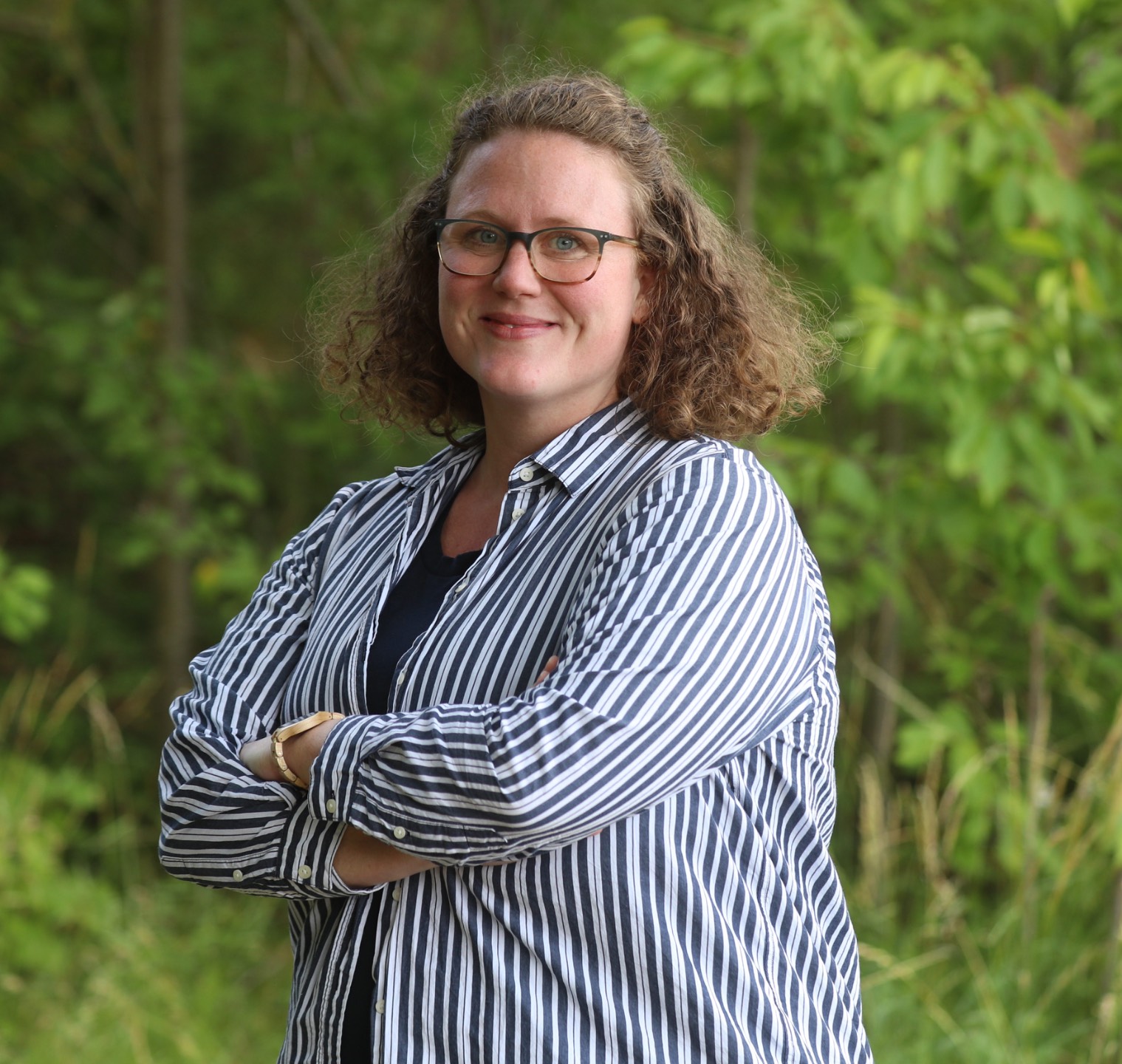
Do I need RNA-seq experience first?
Does this cover CUT&RUN too, or just CUT&Tag?
How long does the course take?
What if I get stuck outside of a live session?
“Simply awesome! I learned a lot about ChIP-Seq, HPC, and plotting beautiful plots in R... highly recommended”
Bachuki Shashikadze - PhD Candidate QBM LMU Munich

I liked the short intro at the beginning of every video and wrapping up what we did at the end. I liked how the teacher was explaining the process, her pace, and vocabulary used (if there was a strange term, it was explained) but also the voice and intonation made the videos pleasant to listen to (this really shouldn't be underestimated). I liked that the training was divided into smaller pieces, the videos were of perfect length. I liked that there was always a script attached, which I can use, modify, adjust to my needs and I can train with it. I liked that we could always ask a question and we received a fast answer. The Q&A sessions were a very good idea so we could hear somebody else's questions as well.
PhD Candidate - CECAD University of Cologne

I participated in the course ChIP-Seq analysis. Very well prepared, informative videos, covering many tools, well explained. Highly recommended!
Samantha F - University of Cologne